We understand the challenge, not just the hardware
spinTwo was founded by researchers who spent careers inside the world's most demanding computing environments, from CERN's particle physics grid to NIH genomics infrastructure. We didn't learn HPC from a vendor catalog. We learned it by needing it.
50+
Years of combined experience
From CERN to federal agencies
1.4B
Brain images processing enabled
Infrastructure we built for NIH neuroimaging research
7yr→wks
Analysis time reduced
Now being optimized to hours
3
Federal agencies supported
By our founders across their careers
Our Story
We built spinTwo because we were the researchers waiting on the infrastructure
Hugo and Eduardo first worked together as physicists on a High Energy Physics experiment at Fermilab, and it was there, running experiments on supercomputing systems, that their paths into advanced computing began. Eduardo went on to work as a physicist in the scientific collaboration at CERN that discovered the Higgs Boson. Hugo went on to design and operate HPC infrastructure for some of the most demanding federal and academic research programs in the country, including NIH, NASA, FDA, and UCLA. They weren't IT vendors who learned to talk to scientists.
They were scientists who understood, from the inside, what it actually costs when infrastructure fails a research team: a delayed publication, a missed grant cycle, a result that can't be reproduced.
spinTwo was founded on a single conviction: the people building HPC infrastructure should understand the workloads that infrastructure was built to serve. Not just the hardware specs. The science behind the compute.
Before spinTwo, Eduardo Luiggi
Worked as a physicist in High Energy Physics, first alongside Hugo on an experiment at Fermilab, then as part of the large scientific collaboration at CERN that discovered the Higgs Boson. His background spans statistical data analysis using frequentist and Bayesian techniques applied to complex scientific datasets.
Before spinTwo, Hugo Hernández
He started in supercomputing alongside Eduardo at Fermilab and went on to design, build, and manage the very first Linux-based HPC cluster at NIAID under Dr. Anthony Fauci's direction, recognized with the NIH Director's Award in 2010. He built two HPC clusters for NIH/NCATS used for drug discovery and life sciences. He built the first Linux-based HPC cluster for the Laboratory of NeuroImaging (LONI) in 2007. He built one HPC cluster for the FDA/CFSAN. Served as principal technical lead for computing infrastructure supporting the FDA's mission to address challenges in food safety and nutrition. He led HPC deployments, workflow tuning, and containerization for the NASA-JSC GNC program as part of Artemis.
The founding insight
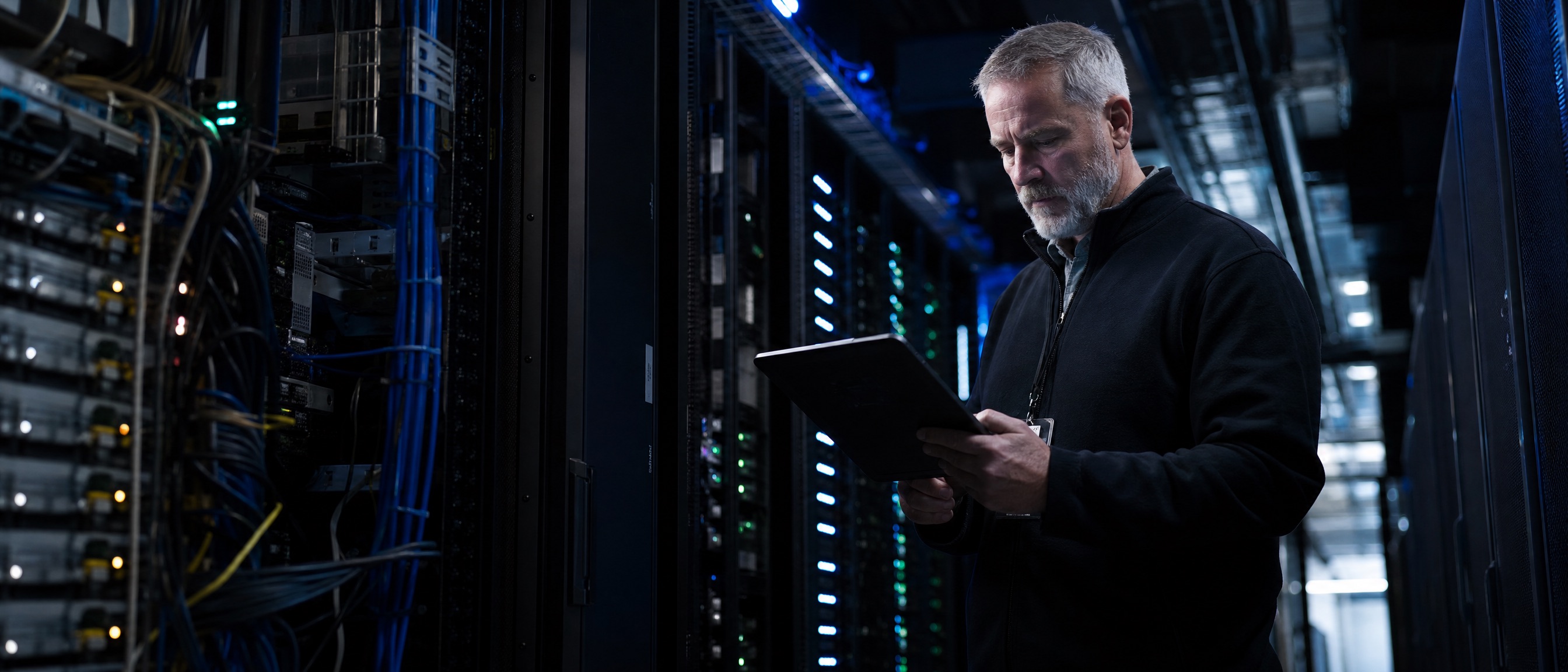
Every failed HPC deployment they'd witnessed had the same root cause: the infrastructure was specified by people who didn't understand the workload. The fix wasn't better hardware. It was better diagnosis. Better configuration.
We know the problem because we lived it
The Team
The people behind the infrastructure
spinTwo is built by scientists and engineers who understand research—and build the technology that powers it.
Our team brings deep expertise in High-Performance Computing, scientific workflows, AI, and cloud technologies. We partner closely with researchers to deliver a secure, reliable platform that accelerates discovery and advances health for all.
20+
Experts
Engineers, scientists, and solutions specialists working at the intersection of research and technology.
25+
Years of Experience
Building secure, large-scale computing environments for mission-critical research.
100%
Focused on Impact
Powering scientific discovery today and enabling the innovations of tomorrow.
Built for Tomorrow
A collaborative team committed to advancing science through expertise, innovation, and operational excellence.
Powering Discovery. Advancing Health. Together.
“
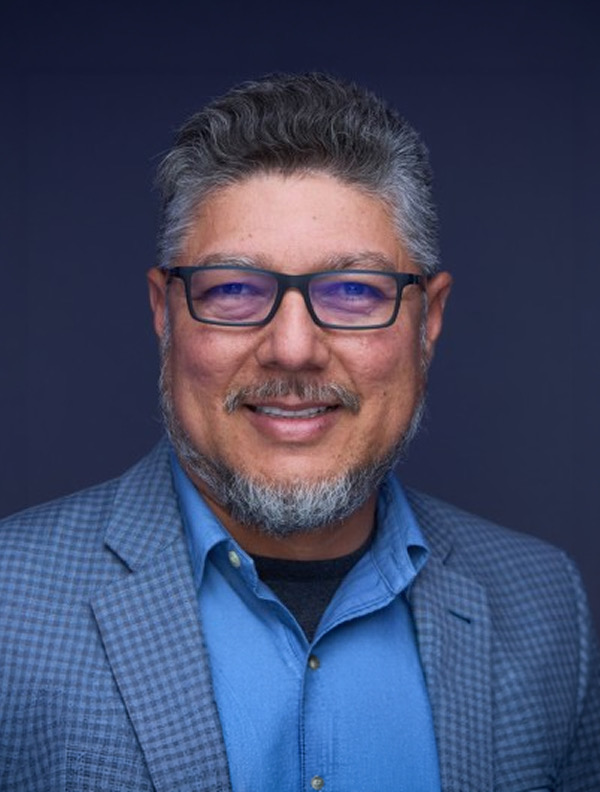
We go further by working closely with scientists on how to use the infrastructure to push the boundaries of discovery.
Co-Founder
Hugo Hernández
View on LinkedInHugo brings more than 25 years of leadership in High-Performance Computing (HPC), Artificial Intelligence (AI), research cyberinfrastructure, and scientific computing. A former experimental particle physicist, he has designed, deployed, and operated mission-critical computational platforms for leading federal agencies, national laboratories, and research institutions, enabling breakthrough science across biomedical research, aerospace engineering, and data-intensive discovery.
Throughout his career, Hugo has pioneered advanced computing environments for organizations including the National Institutes of Health (NIH), the Food and Drug Administration (FDA), NASA Johnson Space Center, and the University of California, Los Angeles (UCLA). He currently leads the computation and operations of Scientific Computing Infrastructure at the National Center for Advancing Translational Sciences (NCATS), integrating HPC, AI, Kubernetes, hybrid cloud, and secure research environments into a unified platform supporting translational sciences and next-generation biomedical research.
NIH / NIAID — NIH Director's Award (2010)
Recognized for designing and building the first Linux-based HPC cluster at NIAID under Dr. Anthony Fauci.
NIH / NCATS
Built two HPC clusters for drug discovery and life sciences research, providing the computational foundation for mission-critical programs.
Laboratory of NeuroImaging (LONI)
Built the first Linux-based HPC cluster for the Laboratory of NeuroImaging (LONI) in 2007.
FDA
Principal technical lead for computing infrastructure supporting the FDA's mission in food safety and nutrition.
NASA
Led HPC deployments, workflow tuning, and containerization for the NASA-JSC GNC systems as part of the Artemis program, enabling advanced simulations and analyses that support mission-critical space exploration.
Hugo brings a unique combination of scientific depth and engineering leadership to solve complex computational challenges and build high-performance environments that accelerate discovery and mission impact.
Co-Founder
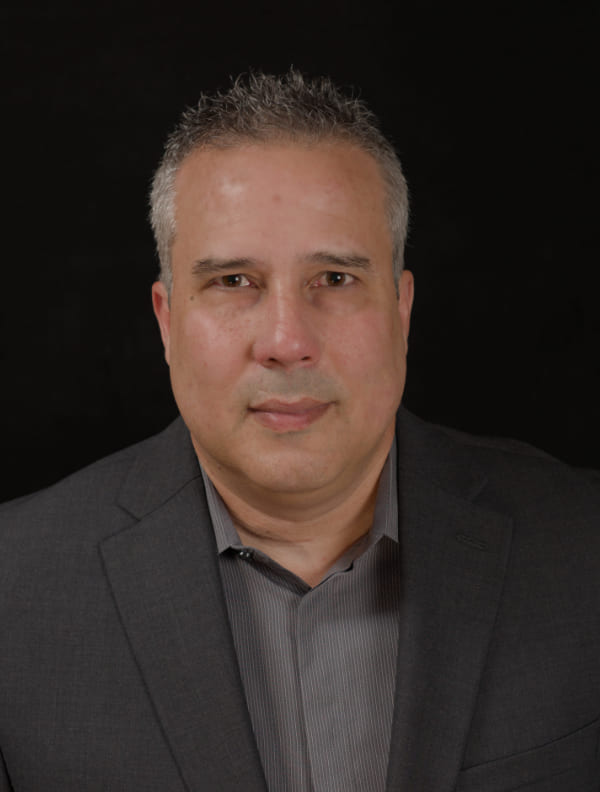
Eduardo Luiggi
View on LinkedInEduardo is a former physicist and senior data scientist with extensive experience applying advanced statistical analysis, machine learning, and scientific computing across research, industry, and federal environments.
His scientific career began in High-Energy Physics at Fermilab, where he and Hugo first worked together on large-scale computational analysis. He later contributed to the discovery of the Higgs boson as part of the international collaboration of the CMS Experiment at CERN, and also developed an extensive academic research background at the University of Colorado.
Beyond academia, Eduardo has led and supported data science initiatives in the private sector and for some federal agencies including the NIH. His expertise includes frequentist and Bayesian methods, predictive modeling, large-scale data analysis, analytical pipeline design, and the translation of complex scientific data into actionable insight.
Fermilab
High-Energy Physics research where Eduardo and Hugo first collaborated, applying large-scale scientific computing to particle physics experiments.
CERN
Physicist in the international scientific collaboration associated with the discovery of the Higgs boson, contributing to large-scale data analysis and scientific computing.
University of Colorado
Conducted advanced scientific research in experimental physics, computational analysis, and statistical methodologies.
Data Science
Expert in frequentist and Bayesian statistical methods, machine learning, predictive modeling, and the design of scalable analytical pipelines for complex scientific and business datasets.
Federal & Private Sector
Delivered data science and AI solutions for commercial organizations and some federal agencies including the NIH, transforming complex data into operational intelligence and decision support.
Eduardo combines a strong foundation in physics and scientific research with deep expertise in data science and analytics to solve complex problems and deliver data-driven impact across science, industry, and government.
“
Bridging the gap between raw scientific data and the infrastructure needed to extract meaning from it at scale.
“
Translating technical excellence into client outcomes, building the organizational foundation that lets the science speak for itself.
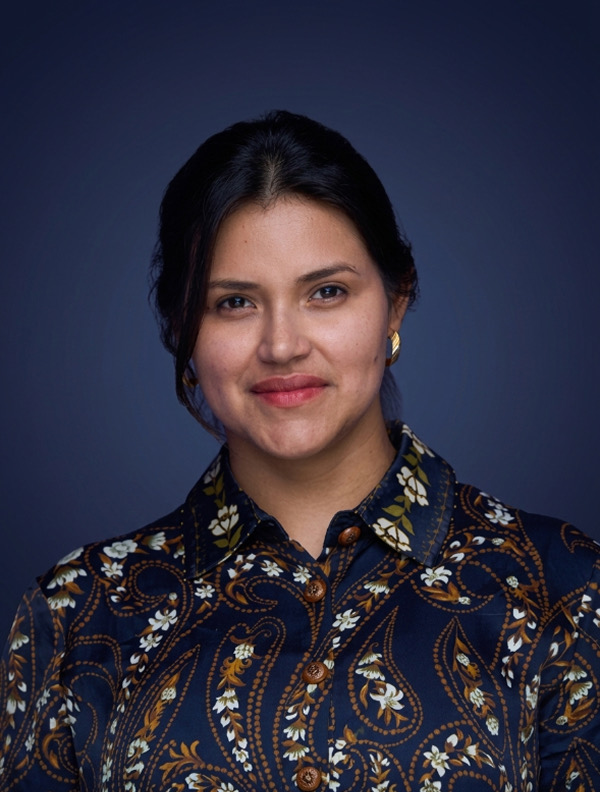
President
Stephanie Noya
View on LinkedInStephanie leads spinTwo's operations, client relationships, and strategic growth, ensuring that the company's technical expertise translates into dependable execution, clear accountability, and long-term client value. She plays a central role in aligning delivery, partnerships, and business operations so that every engagement is managed with consistency, responsiveness, and operational discipline.
She is also driving spinTwo's expansion into new markets, including the private and energy sectors, while helping build the company's presence across Latin America. Drawing on her experience leading projects and scaling operational and logistics capabilities throughout the region, Stephanie works closely with spinTwo's technical teams to bring advanced computing solutions closer to organizations with growing needs in High-Performance Computing, AI, and data-intensive operations.
Her vision is grounded in accessibility. Stephanie believes that supercomputing and AI infrastructure should not feel complex or out of reach. Her focus is to simplify how spinTwo delivers these systems — keeping the technical complexity within the company while giving clients an experience that is practical, understandable, and aligned with their mission. Through this approach, she is helping democratize access to advanced computing for industries and organizations that may have never viewed these technologies as attainable.
Operations
Leads client satisfaction, delivery accountability, and company operations.
Ensures exceptional execution and client success through disciplined processes, clear communication, and operational excellence.
Strategy
LeadsspinTwo's strategic direction and partner relationships.
Builds and nurtures strategic partnerships that strengthen capabilities, expand reach, and create long-term value for clients.
Growth
Expands spinTwo into new markets and industries, including the private and energy sectors across Latin America.
Leverages her experience across Latin America to open new opportunities and bring world-class computing solutions closer to clients.
Access
Champions the democratization of supercomputing, making advanced and AI computing simple and approachable for every client.
Simplifies complex technology so clients can focus on outcomes, not infrastructure — empowering more organizations to achieve more.
What We Stand For
Mission, Vision, and Values
Not boilerplate. The actual convictions that shape how we work.
Mission
To enable scientific and organizational breakthroughs by building the infrastructure that makes them possible, starting with a diagnosis of the actual problem, not a catalog of available products.
Vision
A world where no research team, federal agency, or organization is held back by infrastructure that wasn't built to understand what they're actually trying to compute.
Scientific Rigor
We approach every infrastructure problem the way we'd approach a research question: with a hypothesis, a methodology, and a measurable outcome.
Ownership
We take responsibility for results, not just deliverables. If the infrastructure doesn't perform, that's our problem to solve, not yours to manage.
Honest Diagnosis
We'll tell you when you don't need new hardware. We'll tell you when you do. Our value is in the accuracy of the answer, not the size of the proposal.
Partnership
We don't deploy and disappear. We stay through the full ROI cycle, because we know what it costs when infrastructure fails a team mid-research.
WHY spinTwo
What makes us different isn't what we sell, it's how we think
Every HPC vendor will tell you they have experience, comprehensive solutions, and a client-centric approach. Those are table stakes. What they can't say is that they've been the researchers waiting on the infrastructure they now build.
That experience changes everything about how we diagnose, design, and deliver.
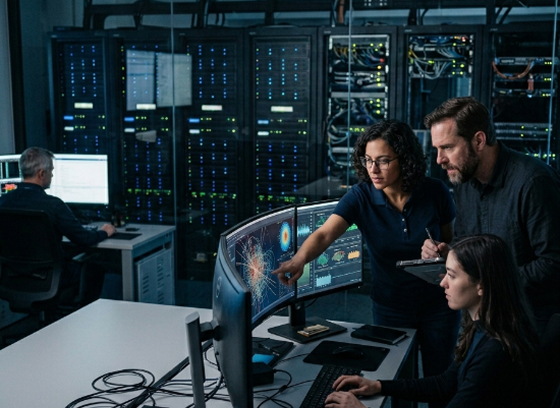
We diagnose before we propose
Every engagement starts with a free infrastructure assessment. We identify what's actually causing the performance problem before recommending a solution. Sometimes that's new hardware. Often it isn't.
We've worked inside the environments we build for
Most infrastructure vendors understand the hardware. We understand the workload. There is a difference between specifying a system and having been the researcher whose experiment depended on it. That experience changes how we diagnose, what questions we ask first, and what we consider a successful outcome. We do not start with a product. We start with your problem.
We stay through the full ROI cycle
We don't define success as a successful deployment. We define it as the point where your team stops thinking about infrastructure and starts focusing entirely on the work it was built to support.
We're honest when you don't need us
If your current infrastructure can be optimized without a new deployment, we'll tell you that. Our long-term business depends on the accuracy of our advice, not the size of the first engagement.
The Origin of Our Name
Born from physics. Built for scientific computing.
spinTwo reflects our founders' background in particle physics and the scientific principles that shaped the company. The name references the graviton — a hypothetical quantum particle associated with gravity and characterized by a spin of 2. Our logo incorporates a Feynman diagram, the visual language physicists use to represent particle interactions. Together, these elements connect our scientific heritage with our mission: building advanced computing environments that enable discovery.
Not sure if you need optimization or a new deployment?
Start with a free infrastructure assessment. We'll analyze your environment, identify what's costing you performance, and tell you honestly what the right next step is, whether that's spinUp, spinBuild, spinData, or something else entirely.